 Skip to content

Shure Microphones in Kenya: Choosing Wired and Wireless Mics (2026)
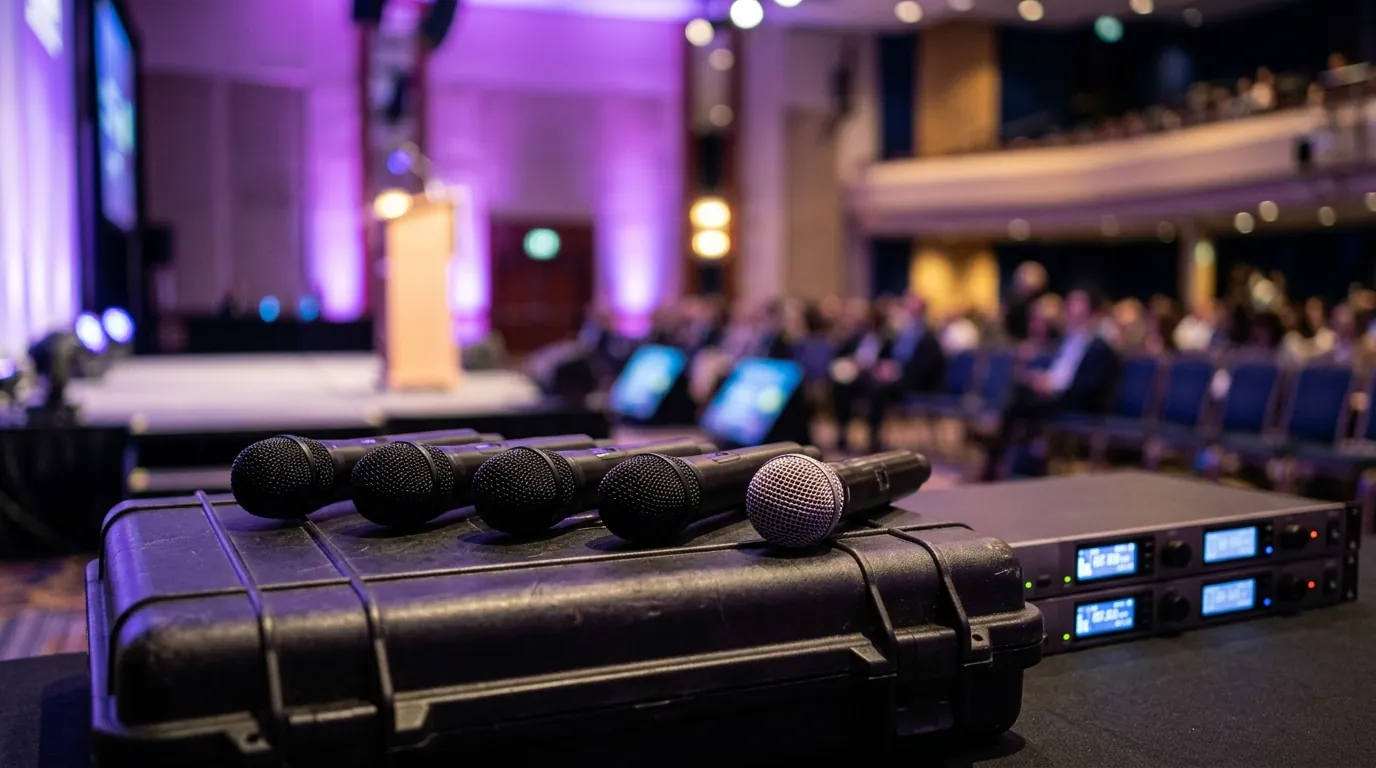
Choosing Shure microphones in Kenya comes down to matching the mic to the job: a dynamic handheld such as the SM58 for speech and vocals, a digital wireless system such as SLX-D, QLX-D or ULX-D when people need to move, and Microflex conference mics for boardrooms. Get frequency planning, placement and power right, buy genuine stock, and a Shure mic will serve you for years.
Key takeaways
- Dynamic mics (SM58, Beta 58A, SM7B) are tough, forgiving and resist feedback, which makes them the safest choice for most live rooms.
- Condenser mics capture more detail but pick up more of the room, so they suit controlled spaces, choirs and recording.
- Shure digital wireless scales from SLX-D for churches and schools, to QLX-D and ULX-D for busy multi-mic venues and installations.
- Frequencies matter. Wireless mics use radio spectrum managed by the Communications Authority of Kenya, so plan channels properly before you buy.
- Buy genuine. Counterfeit Shure mics are common, and a price that looks too good usually is.
Dynamic vs condenser microphones: which do you need?
A dynamic microphone uses a moving coil to turn sound into an electrical signal. It needs no power, handles loud sources without distorting and is less sensitive to sound arriving from far away. That last point is why dynamic mics are the default for live PA systems: they hear the person speaking into them and ignore much of the room.
A condenser microphone uses a charged diaphragm and needs phantom power (usually 48V from your mixer) or a battery. It is more sensitive and more detailed, so it captures breath, acoustic instruments and choirs beautifully. The trade-off is that it also captures more room noise and is more likely to feed back near loudspeakers.
For most Kenyan churches, conference halls and hotel function rooms, start with dynamic handhelds for speech and vocals, then add condensers where detail matters, such as overhead choir mics, acoustic guitars or a podcast studio.
SM58, Beta 58A or SM7B: which Shure mic fits your use?
These three are the names Kenyan buyers search for most often when they look up Shure Kenya. All three are dynamic, but they are built for different situations.
| Model | Pickup pattern | Best for | Things to know |
|---|---|---|---|
| SM58 | Cardioid | Pastors, MCs, speeches, worship vocals, general events | Famously rugged and forgiving. Rejects sound best from directly behind. |
| Beta 58A | Supercardioid | Lead vocalists on loud stages, busy praise and worship teams | Tighter pattern rejects more from the sides, brighter sound and a hotter output than the SM58. |
| SM7B | Cardioid | Radio, podcasts, voice-overs, studio vocals | Low output by design. It needs plenty of clean gain from a good preamp or an inline booster. The SM7dB version has a built-in preamp. |
If you are unsure, the SM58 is the safe all-rounder. Choose the Beta 58A when a singer has to cut through a loud band, and keep the SM7B for broadcast and studio work rather than the stage.
Which Shure wireless microphone system is right for you?
Wireless microphones in Kenya give pastors, presenters and performers freedom to move, but the system you choose decides how reliable that freedom is. Shure’s digital families share clear 24-bit audio and tune in fine 25 kHz steps, which helps you find clean channels in crowded spectrum. The main differences are scale, features and networking.
SLX-D: reliable digital wireless for churches, schools and hotels
SLX-D (now updated as SLX-D+) is the practical choice for most single rooms. Receivers come in single, dual and quad versions for church sound, school halls and hotels, transmitters include handheld, bodypack and plug-on options, and you can run them on AA batteries or Shure rechargeables.
QLX-D: more channels and encryption for busier venues
QLX-D shares the core digital technology of ULX-D with a streamlined feature set. It is very efficient with spectrum, fitting many systems into a single TV channel, and offers AES-256 encryption and network control. It suits conference centres, larger churches and hire inventories that run many mics at once.
ULX-D: the installation and corporate workhorse
ULX-D adds more RF options, Dante digital audio networking on dual and quad receivers and boundary and gooseneck transmitters for tables and lecterns. It is a common choice for boardrooms, parliaments, large conferences and rental companies. Above it sits Axient Digital for broadcast and very large productions.
Not sure which tier you need? Compare the families on the official Shure website, then talk to us about how many mics you run at the same time and how big your venue is.
Wireless microphone frequencies and licensing in Kenya
Every wireless mic transmits on a radio frequency, and in Kenya radio spectrum is managed by the Communications Authority of Kenya (CA). Radio equipment generally needs to be authorised for use, and spectrum allocations change over time as bands are reassigned to broadcasting and mobile services. Requirements can depend on the band and the type of use, so confirm the current position with the CA or with your integrator before a large purchase.
In practical terms:
- Buy the right frequency band variant. Shure sells each system in several regional bands. A unit bought abroad may sit in a band that is busy or unsuitable here.
- Scan before every event. Local TV transmitters, other wireless systems and LED walls can all create interference. Use the receiver’s scan function or Shure Wireless Workbench to choose clean channels.
- Plan multi-mic systems properly. Running eight or more mics in one venue needs coordinated frequencies, not guesswork.
- Consider 2.4 GHz and 5.8 GHz options such as GLX-D+ for small setups, keeping in mind that these bands are shared with Wi-Fi.
Lavalier and headset mics for pastors and presenters
A handheld mic ties up a hand. For a pastor who walks the stage, a teacher, or a keynote speaker with slides, a bodypack transmitter with a lavalier or headset mic is usually better.
- Lavalier (clip-on) mics are discreet and comfortable. They suit panel discussions, TV interviews and calm speakers. Because they sit further from the mouth, they need careful placement and EQ to avoid feedback in loud rooms.
- Headset mics sit close to the mouth, so they deliver more volume before feedback. They are the better choice for energetic preachers, worship leaders, fitness instructors and presenters in large halls.
Fit matters. Clip a lavalier at mid-chest, away from jewellery and clothing that rustles, and keep a headset element at the corner of the mouth rather than directly in front, to reduce breath pops. Our church sound systems team sets these up and trains your volunteers to fit them correctly every Sunday.
Conference and boardroom microphones: Shure Microflex
Meeting rooms have different needs from stages. People speak quietly, sit at varying distances and often join calls on Microsoft Teams or Zoom. Shure’s Microflex range covers this.
- Gooseneck and boundary mics for lecterns, council chambers and boardroom tables where each person has a defined position.
- Ceiling array mics such as the MXA920, which can cover a large seating area out of the box and keep tables completely clear.
- Linear array mics such as the MXA710, which mount on a wall, below a display, on the ceiling or on the table.
- Microflex Wireless (MXW) for flexible meeting rooms where table mics move around.
Array mics work best paired with a DSP that handles echo cancellation and noise reduction. We design these as part of complete conference solutions in Kenya, matched to your room size, seating and video platform.
How do you stop microphone feedback?
Feedback is the squeal you hear when a microphone picks up a loudspeaker and the sound loops. It is the most common complaint we hear about church sound and event audio. These steps solve most cases:
- Keep mics behind the main speakers. Never let a presenter walk in front of the PA.
- Use the pickup pattern. Point a cardioid mic’s rear at the floor monitor. For a supercardioid like the Beta 58A, place monitors slightly to the sides of the mic’s rear, where it rejects best.
- Get the mic close to the mouth. A speaker who holds the mic at chest height forces you to add gain, and gain is what causes feedback.
- Mute unused mics. Every open mic adds to the problem.
- Ring out and EQ the system so problem frequencies are cut before the service or event starts.
- Treat the room. Hard, echoing halls make feedback worse. Our acoustic solutions reduce reflections so speech is clearer and louder before feedback.
How to tell genuine Shure microphones from counterfeits
Fake SM58s and fake wireless kits are widely sold online and in some markets. They look similar but sound worse, fail sooner and are not covered by any manufacturer warranty. Watch for these warning signs:
- A price far below what other reputable suppliers charge.
- Poor packaging, spelling errors, blurry printing or missing documentation.
- A body that feels light, a loose grille or rough finishing.
- Missing or mismatched serial numbers and labels.
Buy from a supplier that can explain where the stock comes from and stands behind what it sells. If in doubt, check Shure’s own guidance on counterfeit products before you pay.
Caring for your microphones and managing batteries
A well cared for Shure mic can last a decade. A few simple habits make the difference:
- Clean grilles regularly. On many handhelds the grille unscrews, so you can wash it with mild soap and water and let it dry fully before refitting.
- Store mics in cases, away from dust and humidity, and coil cables over-under to stop them kinking.
- Start every event with full power. Use fresh, good-quality AA batteries or fully charged Shure rechargeables, never a mix of old and new.
- Use Shure rechargeable packs where possible. SLX-D accepts the SB903, while QLX-D and ULX-D use the SB900 series. Receivers can show remaining time, which takes the guesswork out of long services.
- Remove alkaline batteries during storage so leaks do not damage the contacts.
What affects the cost of a Shure microphone setup?
We do not publish fixed prices because every project is different. The main cost factors are the number of mics in use at once, wired versus wireless, the wireless tier (SLX-D, QLX-D or ULX-D), the type of transmitters (handheld, headset, lavalier or gooseneck), rechargeable batteries and charging docks, antennas and cabling for larger venues, and integration with your mixer, DSP or video system. After a free site survey, VTECH gives you a fixed quote within 24 hours.
How VTECH helps with Shure microphones in Kenya
VTECH Audio Visual Solutions supplies, installs and hires Shure microphones for clients across Kenya. We help you:
- Choose the right mics for your room, people and budget, without overselling.
- Install and configure wired and wireless systems, including frequency planning and integration with your sound system.
- Train your team, from church volunteers to hotel and boardroom staff, so the system works every time.
- Hire microphones for one-off events, conferences and weddings through our equipment hire service, with technicians on site if you need them.
Ready to get clear, reliable sound? Book a free consultation or WhatsApp us on +254 182 942 946, and visit us at Ground Floor, Mpaka Plaza, Mpaka Road, Westlands, Nairobi.
Frequently asked questions
Do I need a licence to use wireless microphones in Kenya?
Radio spectrum in Kenya is managed by the Communications Authority of Kenya, and radio equipment generally needs authorisation. Whether a specific system needs a licence can depend on its frequency band and how it is used. Before buying several channels for a church, hotel or conference venue, confirm the current requirements with the Authority or ask VTECH to advise during your site survey.
How many wireless microphones can I run at the same time?
It depends on the Shure system, the frequency band you buy and how crowded the local radio spectrum is. Digital families such as QLX-D and ULX-D are very spectrum efficient, so they can run many channels together when frequencies are coordinated properly. A scan of your venue is the only reliable way to know how many clean channels are available.
Can I mix wired and wireless Shure microphones on the same mixer?
Yes. Wired mics connect straight to mixer inputs, while each wireless receiver outputs a normal mic or line signal that plugs into its own channel. Many churches and event venues use wired SM58s on the stage and wireless headsets for the pastor or presenter. Just set the gain for each channel separately so levels stay balanced.
How far can a Shure wireless microphone work from the receiver?
Shure quotes typical line-of-sight ranges of up to about 100 metres for its main digital systems, but real range in a building is shorter. Walls, people, metal structures and interference all reduce it. Placing receiver antennas in clear view of the stage, or using remote antennas in large halls, gives the most dependable signal.
Is it better to hire or buy Shure microphones for an event?
Hiring makes sense for one-off conferences, weddings, launches and concerts, because you get tested equipment, coordinated frequencies and a technician without a large upfront spend. Buying is better for churches, schools, hotels and offices that use microphones every week. VTECH offers both, and can recommend the more cost-effective option once we understand how often you need the mics.